
Weeks 1–2
Pain
Calm the system down.
Gentle vestibular and stability work settles the dizziness and calms your nervous system’s overreaction to movement, starting your very first visit.
What We Treat
The pause before you step onto uneven ground. The hand that reaches for the counter before your body even asks it to. It’s fixable, and it starts with a cause-first evaluation, not a guess.
Sound Familiar?
Two or more? Keep reading.
Why It Happens
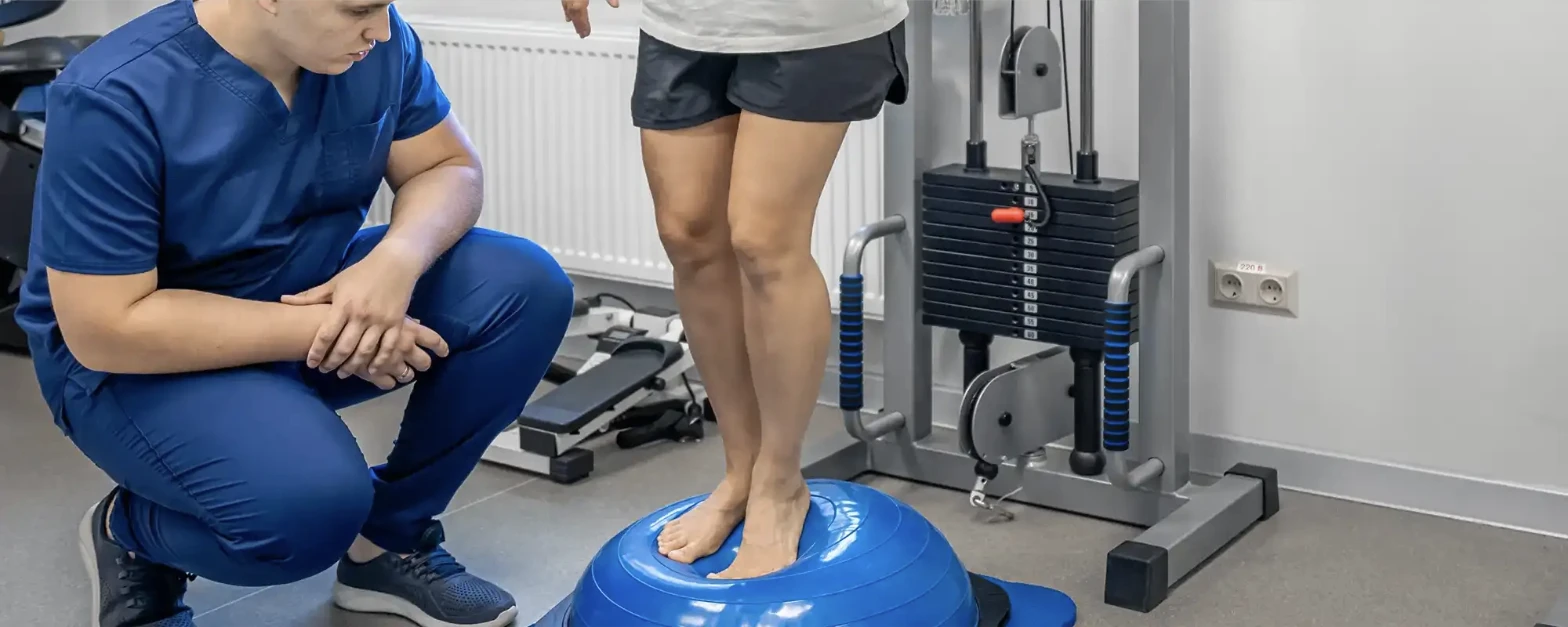
Your balance doesn’t fail for no reason. And it’s almost never just one thing. It’s usually some mix of four culprits: an inner ear that’s stopped sending your brain reliable signals. Weak hips and ankles that can’t correct a stumble fast enough. Vision and joint sense that haven’t kept pace with everything else. And a natural, protective slow-down that’s quietly shrunk how far you trust your own footing.
None of that shows up on a quick glance. It takes a real, cause-first evaluation to sort out which one is actually driving your unsteadiness. That’s why generic balance tips so often fall short: they treat the symptom, not the source. Find the real cause, and the fix gets obvious.
The Honest Truth
Nobody regrets starting too early. Every week, someone in our clinic says they regret waiting.
How We Fix It
Every plan has an endpoint. Here’s what the four phases look like for balance and gait.
Weeks 1–2
Pain
Gentle vestibular and stability work settles the dizziness and calms your nervous system’s overreaction to movement, starting your very first visit.
Weeks 2–6
Prime
Targeted vestibular and mobility exercises restore the coordination between your eyes, inner ear, and joints.
Weeks 6–10
Perform
Progressive strength and reactive balance training rebuilds the quick corrections your body needs on uneven ground.
Weeks 10+
Prevent
Real-world stairs, curbs, and distractions get tested under real conditions before you’re cleared to go all-in: that’s the endpoint, not just another appointment.
Balance and gait training is one of my specialties. I look at how you move as a whole, not just where you feel unsteady, and build a plan that rebuilds your confidence step by step.
Dr. Stacy Alvares · Balance & Gait Disorders
Questions, Answered
Usually not, and it’s rarely the first step. Most balance issues come from a mix of inner ear, vision, and strength factors that a Doctor of PT can identify directly. We start with a hands-on, cause-first evaluation to find what’s actually driving your unsteadiness, and if a referral ever becomes genuinely necessary, we’ll help you get it. You don’t have to wait on a specialist to start feeling steadier.
Some vestibular exercises can feel briefly uncomfortable, but they’re dosed carefully, not thrown at you all at once. A Doctor of PT builds your tolerance gradually and in a controlled setting, so you’re never pushed further than your system can safely handle. Avoiding movement entirely is what actually keeps unsteadiness around longer.
Most patients feel meaningful change within 4–6 visits. A full plan for balance and gait runs through all four phases, Pain, Prime, Perform, and Prevent, typically over 8–10 weeks, depending on how long you’ve been dealing with it. Either way, you get a plan with an endpoint: you’ll always know which phase you’re in and what’s left, not an open-ended string of appointments.
Book Your Visit
Request a time and a real person calls you back, usually within two business hours. No phone tree. No ‘someone will reach out.’ Just a plan.
4.8 · 115+ Google reviews
Typical response: under 2 business hours
Step 1 of 5
That’s the hard part done. We’ll call during business hours to lock in your time. Most people are on the schedule same week.
Visit Us